Paid to Farm Every Day - Beau Carter’s Solar Grazing Empire


Key Takeaways
- Beau Carter scaled his livestock operation from 40 sheep to managing roughly 380 sheep, cattle, and goats across 11 commercial solar sites spanning 350 acres.
- Solar grazing introduces a historic paradigm shift where farmers are paid daily for vegetation-management contracts, turning traditional commodity crops into near pure profit.
- By leveraging the American Solar Grazers Association (ASGA) map and professional networking platforms like LinkedIn, producers can discover untapped commercial solar sites in their region.
- Viewing livestock as a compounding wealth vehicle rather than relying solely on traditional financial markets offers a practical path toward true self-sovereignty and financial security.
- Utilizing innovative technologies like geofence collars allows livestock managers to effectively oversee and rotate animals on remote commercial solar sites several hours away.
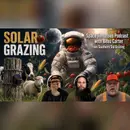
Never in history have farmers been paid just for farming until solar grazing. In this episode of The Space Tomatoes Podcast, Havok and LX sit down with Beau Carter of Southern Sol Grazing to unpack how he scaled from a hay crisis and ~40 sheep to managing ~380 sheep (plus cattle and goats) across 11 solar sites and ~350 acres.
Beau breaks down the COVID-era drought that forced the pivot, Greg Judy-inspired stockpile grazing, creative land leases, the American Solar Grazers Association map that revealed the opportunity, multi-species grazing (sheep + goats + cattle), geofence collars for remote management, livestock as a compounding wealth vehicle that outperforms gold/silver, solar site myths (no concrete graves, panels tougher than mowers, wires stay hot), landowner economics ($750–1,000+/acre), shade as “solar superpower,” and upcoming LSU soil/forage testing (Haney, microscopy, TDI, toxicity).
This is the paradigm shift: vegetation-management contracts cover costs so your commodity crop becomes nearly pure profit, while building soil and sovereignty.
Chapters
00:00 Teaser: Never Paid to Farm… Until Solar
01:12 Welcome & Beau Carter Intro
02:00 Origin Story: COVID Drought, Hay Shortage & Greg Judy
06:00 Stockpile Grazing, Debt-Free Leases & Scaling Land
13:30 Discovering Solar Grazing, ASGA & Landing 11 Sites
18:00 Herd Explosion, Livestock-as-Investment Mindset
26:30 Remote Management & Geofence Collars
28:00 Why Sheep + Goats + Cattle & Permaculture Edge Effect
34:30 Solar Site Reality Check: Posts, Reclamation & Landowner Wins
40:30 Getting Paid for the Daily Act of Farming
47:00 Local Food Paradigm Shift & Production Math
50:00 Debunking Damage Myths (Panels, Wires, Scratching)
1:01:30 Shade Benefits Under Panels
1:05:00 Personal Solar, Wells & Preparedness
1:08:30 LSU Soil Testing, Mineral Buffets & Building Biology
1:18:30 Influential Figure (Beau’s Dad) + How to Find Him
1:22:00 Wrap-Up & What’s Next (Robot + Return Visit)
Follow Beau: @SovereignTRanch (X), Southern Sol Grazing (IG/TikTok/LinkedIn), southernsoulgrazing@gmail.com
Want to be a guest on Space Tomatoes? Send us a message on PodMatch, here: https://www.joinpodmatch.com/spacetomatoes
Frequently Asked Questions
What is solar grazing?
Solar grazing is the practice of using livestock, primarily sheep, to manage vegetation and control grass growth on commercial solar energy sites.
How did Beau Carter get started in solar grazing?
Beau discovered solar grazing after experiencing a COVID-era drought and hay shortage, joining the American Solar Grazers Association, and using their interactive map to find nearby solar sites.
How do solar grazing contracts benefit landowners and farmers?
Vegetation-management contracts cover the operational costs of farming and provide steady income for the farmer, while landowners benefit from professional, eco-friendly land maintenance.
How are remote solar sites managed without being there every day?
Farmers can leverage advanced technologies like geofence collars to monitor and move livestock remotely across multiple distant solar installations.
0:00 But here's the cool thing. Never in the history of agriculture has a farmer been paid to farm. Think about that. Now, we get paid to produce a commodity crop, right? Whether that be corn, whether it be soybean, whether it be tobacco, cotton, a lamb crop, a calf crop, whatever it is, that's our commodity and we get paid once a year when we sell that okay and it's heavily dependent upon nature right particularly with with with you know row crops right you know a a late windstorm can break every stalk of corn and you got nothing to sell right um but never in the history of farming have farmers been paid for the day-to-day activity of farming all right everybody welcome back to another episode of the space tomatoes podcast i'm one of your house havoc i'm the other guy lx hello welcome back we love that other guy today we're joined by a special guest bo carter from southern soul grazing welcome to the show bo how's it going
1:33 gentlemen i appreciate y'all having me absolutely yeah we're very glad to have you on uh just found you on X and started following you. And, and I just think what you're doing is, is something that needs to be spread. The message needs to get out there. And I think there's an opportunity for a lot of people that are running livestock to, you know, increase, increase their, their feed blots and decrease their costs. So, you know, one of the things that attracted me is, is, you know, you're, you're essentially going out to, you know, solar sites, large, you know, commercial solar sites and, you know, grazing that land, which is obviously going to promote better, uh, pasture space, right. Just from the manure and, you know, just the, the general light traffic on that over, you know, a course of time, et cetera. Um, what, what brought you to this idea? What made you think, you know what, I could, I could do something with this. Well, it started honestly, like during COVID, and it took me several years to kind of land on the solar grazing thing.
2:48 So, you know, I had been doing regenerative agriculture, permaculture, since probably like 2010. And we had a pretty bad, you know, seasonal drought in, I think, 2020. It might have been 2021. and hay was really hard to come by that year. I've never cut my own hay. That's a philosophical thing. You know, do y'all know who Greg Judy is? I'm not familiar with Greg Judy. Well, I always tell everyone, you know, if there's a Mount Rushmore of, like, regenerative grazers, Greg Judy's at the very front.
3:39 Like, to me, you know, he is the role model that people who run livestock should follow. And I'll talk a good bit about him today because a lot of what I do, you know, is modeled after, you know, Greg's operation. With some twists and turns to kind of fit, you know, my context. But Great Judy always talks about the fertility, right? Like fertility is really the lifeblood of building soil. And when you're cutting hay, you're robbing your ground of fertility because people don't generally cut hay on land that they also graze, right?
4:30 Like you have hay pastures and you have cattle pastures. And on the land that you're cutting hay on, you're robbing that fertility and those nutrients from that soil. You may be depositing it on someone else, I mean, on another part of your farm. But it's a much better model for most people. I mean, obviously there's nuances, but for most people, it's a much better model to buy your hay and bring their fertility onto your farm and graze all of your acres, right? So I've always bought hay, but, you know, there are years when hay is hard to source, right?
5:17 or maybe it's expensive. But this particular year, like I just couldn't get any hay. And at that time, I was running around 30 cow-calf payers. And I came real close that year to having to sell cows because I just didn't think I was going to be able to get my hands on enough hay to feed them. um so i made like a solemn vow to myself like i was never gonna get in that position again i read this book by a guy named jim garish called kick the hay habit where he talks about a practice called winter stockpile grazing um which i was familiar with because greg talks about winter stockpile grazing. Greg feeds hay, but Greg only uses hay as an insurance policy.
6:11 You know, Greg does a lot of winter stockpile grazing. He manages his pastures in a way that leaves hay for your animals to graze during the wintertime. You know, that's their natural instinct is to graze it isn't to be around a hay ring right um and like if you think about it it makes perfect sense nobody carried hay out to buffalo right nobody carried feed out to buffalo what did they eat in the winter time you know they they they they they plowed snow and they found forage standing left over from somewhere that wasn't grazed.
6:54 So that's their natural instinct. And I think that's a part of, you know, one of the parts of regenerative agriculture that I think a lot of producers and a lot of farmers really miss out on. We're really trying to mimic the way these animals behaved before man came along and screwed it up, right? So anyway, I started reading about this, this stockpile grazing philosophy. And, you know, one of the challenges is you really, you know, you need to have the acres to be able to manage your pastures in a way so that there is forage left over in the wintertime.
7:39 going back to greg judy he wrote a book called no risk ranching that i read right about the same time a little backdrop on greg is is greg you know he's built this cattle empire but greg didn't he wasn't born into land like he didn't have any he didn't have any cattle and he had no money it's hard to get into it's hard to get into ranching when you have no land no cows and no money right but what greg did was he found people that had land that wasn't using it you know and and and a lot of the the the acres that he that he did this on you know they were they were poor poor acres you know they were a bad forage um but he found land that nobody was using he leased it and then he went out and found people who had cows but no grass right and so they paid him to bring their cows to eat his grass and he owned neither but he saved his money right instead of doing this this whole debt slave cycle that americans love to put themselves in well i'll go out and borrow money and i'll buy land and i'll buy hay rings and money for fences and and and trucks and four-wheelers and side-by-sides.
9:02 No, Greg, you know, he leveraged other people's land and other people's cattle, saved his money until he could go out and buy his own cows. And he saved and saved and saved until he could buy his own farm, right? So that really resonated with me because I'm very big into not being in debt. You know, I don't want to be a debt slave. So, you know, everything I do, I try to, you know, do it in a way that I cash as I go, you know. So that really resonated with me as well. The problem is, is I'm about two hours from Atlanta.
9:42 And during COVID, you know, a lot of suburban people moved out my way, right? Because people didn't have to commute anymore. people were doing like teleworking you know or whatever remote working from home so kind of while this was going on the the land prices like with everywhere else in the country around here skyrocketed so nobody wanted to lease their land because they were sitting on it waiting for that big payday when they could sell it so i had to get creative and i originally started out if you've ever heard of like this goats to go model where people rent out goats and they bring them to your yard and they they eat all the brush in the back you know all the unwanted stuff i didn't have goats though but i had sheep so i started doing it with sheep and uh i leveraged that you know i i did that for a few years and i found people who who had land who probably if i would have just like went and knocked on their door and said hey can i lease your your farm they would have said no but i i built that relationship with them they trusted me they had land they weren't using they loved having the animals there they just didn't want to have to take care of them so i was able to leverage that into a couple of leases and uh my farm is 80 acres which sounds like a lot but it's not when you start running livestock i promise you um oh i
11:18 I'm well aware of that. I mean, we're only on 10, and, you know, I constantly get the question, why don't you raise cattle? And where we live in North Carolina, you basically have an acre requirement per head, one and a half for a cow-calf pair, right, until weaned. And then, of course, that becomes two, right? Right. And and so, you know, we've got three horses, we've got goats, we've got chickens, turkeys and geese, but we can't raise cattle until we get more land. And it's just one of those things you'd be amazed. Ten acres is all we have. But a lot of people look at it and go, that's a lot of land. It's I'm out of land.
12:03 Yeah. Yeah. You can do a lot on 10 acres. Make no mistake about it. But, you know, when you're, you're, you know, you get into like actual, when you kind of transition from homesteading into like production, you know, 80 acres goes really fast. Honestly, a hundred goes really fast. But I was able to leverage that and I leased, you know, kind of like a no cost barter lease. You know, I was like, hey, I'll keep my, I'll keep my animals in your place. You know, I'll maintain it, make it look nice. Your wife and your daughter can take Instagram pictures with the cows and the sheep.
12:43 You know, they love that. And I'll do all the work, right? And so I was at two different farms, totaling about 120 acres, which gave me, now I had access to 200 degrees, right? Well that allowed me to get more animals It allowed me to stockpile my grass that was growing on my farm right So I had something to feed them in the wintertime because I wasn grazing it during the summer I had my animals on someone else's place, which worked out great. Well, I got into doing, because I'm big into permaculture, And I got into, I really wanted to get into like organic orchards and vineyards, you know, and doing like targeted grazing, you know, eliminating pesticides and herbicides and all that and synthetic fertilizers.
13:39 So I really started like targeting, you know, organic, you know, like I said, orchards and vineyards. and um i was coming back from alabama in february this year uh another guy who does targeted grazing out west now that's a that's a different situation because you know out west they they utilize targeted grazing a lot for for fire fuel reduction right so fire mitigation they run usually goats you know out on this government rangeland and and and public lands and they're eating you know the fire fuel before fire season comes um out here and you y'all know this you're florida north carolina i mean i get 52 inches of rain a year here right and we have a nine month growing season so i'm trying to beat back a jungle from taking over right completely different ball game but um I was coming back from Alabama from a consultation.
14:41 I was listening to this podcast called The Goat Grazing Podcast by a guy named Max Wade. And he had this lady who was a solar grazer on his podcast. And I thought, wow, that's interesting. I knew that that was a thing. I knew that there were people who ran sheep on solar sites. but honestly i didn't realize how many acres of solar are out there you know east coast we have so many trees most of them are pretty well hidden um you know they're mostly not on main roads um so unless you just happen to live near the site you know and you're driving back roads every day in the area a lot of these sites you don't even know are there but um she was talking about this organization called ASGA, the American Solar Grazers Association.
15:33 So I pulled over and I pulled up ASGA. It was like 75 bucks to join, paid my membership fee. And they have this interactive map on there where you can like, you know, scroll around and it has little stars wherever there's a solar site at. And I'm looking and there's, you know, 25 within an hour and a half of me. so my next question was well who's grazing them and they also list people who are members of ASCA that graze the solar on there and there wasn't anyone within three hours so I started calling other people that were listed as solar grazers and just introduced myself and was like hey you know I guess technically I'm competition but you know let's be buddies tell me about this solar grazing thing. And so that was in February. And somehow, miraculously, I hit the streets, man. I was going to every solar site within a couple of hours of me on that map. I was getting a lot of the sites on the gates, you know, they'll have a number to call, you know, for entry or in case of emergency. I was calling people. I did not have a LinkedIn, but I figured, you know, there might be people who work in the solar industry on LinkedIn. So I joined LinkedIn, created a profile, started finding people who work for the companies that own the solar sites. You know, their sign was on the gate and started sending them messages. And, you know, miraculously, I ended up with like
17:09 11 sites totaling about 350 acres this year, which is pretty crazy because like, now knowing what I know, they like to, they like, like right now is the time they like to be getting their vegetation management contracts done for the following grazing year, you know? So it's really pretty miraculous that I was able to get those sites that I had. But I ended up, like I said, I ended up with 11 sites, totaling about 350 acres. You know, they're all over the place. I I have a site in Spartanburg, South Carolina, Rome, Georgia, which is northwest corner.
17:51 I have a site in Bainbridge, Georgia, which is southwest corner. And I have one in Jacksonville, Florida, which is on the east coast. And then all in between. So I've got sites all over the place. But it's been awesome, man. Do what? how hard is it to manage all those how hard is it to manage all those different you know camper or something you manage so here's the way i've managed them and and just go and my herd grows you know i'll approach this a little bit differently um you know i kind of picked the sites that were closest to me that had the best forge and those are the ones that i focus on keeping the sheep on um and and and i also had to think about you know how am i going to get them water because most of these sites don't have water on site um and then the rest of them this year i did a lot of mowing unfortunately like that's not something i want to do you know continuously down the road but it's what i had to do this year to make it work i did a lot of mowing but you know Just to kind of put an exclamation point on what a game changer this is for me.
19:14 You know, I went, well, I left this out to going back a little bit when I was talking about 2000 or 2020. When I, when I about ran out of hay, I ended up not like I, I squeaked my way through the season without having to sell any. but you know because of the stockpile grazing and some other things i was doing i ended up selling all because i had angus i ended up selling all of those angus and i started a new herd with dexters and jerseys and you know so i was i was kind of rebuilding my herd i started this year i had i had 10 cows and about 40 to 50 head of sheep and right now in the season um i've been able to buy i'm up to like 30 cows and 350 almost well actually 380 sheep is what i have right now and by next year i'm going to be at 100 cows and a thousand head of sheep is my goal next year and you know i can only do that because of the the revenue that i generated from the grazing contracts the vegetation management contracts and the additional acreage you know that that that i have now to graze these animals on um i've invested every dollar that i've made this year into more animals and, you know, the equipment that I need to be able to manage them the way that
20:49 I need to manage them on these remote sites. You know, if I may, I have a little bit different view, you know, on livestock probably than a lot of people. But I think it's an important view. I think we need to shift our mindset, especially, you know, we have a government, you know, there's a lot of uncertainty, like about the future, right? Like the solvency of our currency, the security that we have here, you know, is in question. And, you know, I'm a prepper. You know, I look at everything from the lens of what can I do to be more sovereign and to be more secure, you know, to offer more security to my friends and family and people I care about.
21:42 I view livestock as an investment, right? Like I don't personally trust the stock market. You know, I invested in the stock market for many years, but, you know, now for several years, I've been completely out of the stock market game. You know, I like precious metals. You know, I do like Bitcoin. And I love livestock. So if you look throughout history at people who built great wealth, livestock was at least a part of how they did that.
22:24 You know, historically, the price of a cow and an ounce of gold have been, you know, kind of in line with each other. Now, it's varied, but pretty consistently, an ounce of gold was typically the same as the price of a cow. Sheep has generally been on par with the price of an ounce of silver. Right now, which I'm not sure what silver is going for today, but $50 to $60 an ounce and kind of in that range. right now uh you know a sheep is about the price of of around five ounces of silver um but but and and i love gold and i love silver but the thing about gold and silver is that ounce of gold all it's ever going to be is a single ounce of gold right it can go up in value you, but it's always going to be an ounce of gold. The thing about a cow is that cow's going to give you another ounce of gold every year, right? And then one out of two ounces of gold that it spits out is going to be able to give you another ounce of gold every year, right? So those ounces of gold can exponentially increase. And sheep are the same way, but they're even more prolific than cows because a sheep is generally going to give you one and a half babies every, you know, eight to nine months.
24:06 You can breed a sheep three times in two years. So that one sheep, you know, if it's five ounces of silver, every two years, it's going to give you 21 more ounces of silver. You know, so the problem is, the problem is years ago, like hundreds of years ago, you know, people didn't necessarily own land per se, you know, so they had an unlimited vault, right, that they could just let their animals reproduce and grow their herd. Well, when we started like titling land and deeding land, that also kind of restricted the size of your vault, right?
24:51 So for the last few hundred years, people who had livestock, they were limited in how much their investment could grow by the size of the vault, right? How many acres they had. And once you maxed out that vault and had it full, you no longer could grow your wealth. You know, you have to sell your animals, which is income, but it really limits your growth. One of the cool things I think about, like with this solar grazing thing, is it's really given me unlimited space to grow my wealth.
25:35 right, to grow my herd, to grow my flock. It's really only limited by how much I can get, like how much, you know, I can get under contract and how much I can manage. And I'm sure we'll get into, you know, a few ways, a few things that I'm doing to help me kind of manage that because you asked me like how do I manage like sites in Jacksonville and and Spartanburg South Carolina sites that are four or five six hours away And, you know, I've moved. I'm not sure if you've seen Havoc these geofence collars that I'm getting for my animals.
26:17 But we'll talk about that. But that's one of the ways that I'm going to be able, as I grow my herd and I start putting them on these sites that are further away, that I'll be able to manage them without actually being there every day. Yeah, that was actually one of the things that I thought was really cool was the geofence collars. Sorry, my dollars were barking. Can you ask me that again? A tone and then a shock of some form. They did. It's all right. Uh, so I imagine they, uh, deliver a tone first and then a shock. Yeah. So basically an electric fence on steroids because no fencing needs. Um, one of the things I did want to ask you is, you know, like we have goats and, uh, you know, in the areas where they have access to it, they have kept our pasture, our tree. If you've never been in the South. Okay.
27:20 if you go anywhere near the edge of a wooded area, it's not just trees, unless you're in a pine area. If it's all pine, it's just trees and pine needles. But if you get outside of that really acidic environment where all the pine needles are dropping and create a lot of acid, right, and you go into what is primarily out here, which is oak, hickory, pecan, you know, these types of woods, what you find is is that there are vines and thorny vines and you know just all this stuff that grows up as so thick you can't walk through right i mean it's it's a wall um but wherever our goats can touch that pasture space not only are the trees trimmed to about you know eight foot but everything else is gone right it's just clear it's it's beautiful right so one of the things i was wondering is is why not goats but then it kind of hit me well it's probably mainly grassy area because i do have goats on solar actually i was wondering why not add some goats in there and as far as i know so i'm i think i might be the only guy in the country that has goats on solar and best i can tell i'm only one of three that has cattle on solar and i actually i think i was the first one. I think the other two started doing it after they saw me post about it.
28:47 Sheep have always been used. They're like the traditional go-to because they're small. They, you know, they don't like to climb on things like goats do. They're pretty easy to manage. So, you know, solar grazing has actually been around for, you know, 10, 12 years, I think was when it first, you know, the first guy put sheep on solar. And, you know, it was just kind of a hidden, unknown thing until the last probably five years. And there's still a lot of opportunity out there. I mean, in Georgia and Florida alone, there are 160,000 acres of solar. And I'm going to say less than 5% of that's being grazed right now. So there's definitely a lot of opportunity for people to get into it, but it's starting to become a known thing, right? So, um, everyone is just you sheep. Honestly, I mean, you guys probably understand this. We live in a very, uh, monkey see monkey do society. Um, you know, people are, are, are scared to take chances and, and try things.
29:54 Um, and, and some sites, you know, I probably wouldn't run cattle or some sites I probably wouldn't run cheap on um but you know other sites there's no reason why you can't run all three and actually there's a lot of a lot of benefits to run all three together um and you know you were talking about the edge of the woods i don't know how much y'all are into permaculture but there's like 12 like like principles of permaculture and one of them's called the edge effect and uh and and that that that edge of the forest that you're talking about where it's a wall of just vegetation that's actually like one of the the primary principles of permaculture because you have like this convergent of soil types uh bacterial dominant soil fungal dominant soil kind of meat you've got the perfect amount of sun the perfect amount of shade um you know most things that we think love full sun like tomatoes like peppers um they actually really don't love to be out in the scorching sun all day long. Most things love morning sun and even some midday sun, but most things don't like hot late afternoon sun. So that edge effect is really like the perfect convergence of varying conditions that a lot of things thrive in. You know, that's why, and, you know, for you guys, you may know this, but maybe some people listening don't, you know, there's like seven
31:26 layers of a food forest, right? And conventional agriculture, you know, they tell us, if you're going to plant an orchard, you know, you need to plant your trees 20 feet apart, right? That's crap, man. Just drive down the road and look at the edge of the forest and you see the overstory trees, the understory trees, the shrubby things, the viny things, the ground covers, they're all thriving, right? They're not competing for nutrients. They're not competing for water. They're thriving. And they do that because that's a guild, right? That is a community that comes together. And what's the old saying? The sum is greater than the individual parts.
32:07 Like that thing happens. That's why, you know, I always tell people when you're gardening, you know, man, just pack that stuff in there. They actually learn what plants work well together. You know, there's inner planting and things like that. But, you know, that's actually a good thing. and those plants actually kind of feed off each other. But going back to your question about the goats, yeah, man, you know, here in the South, like you said, you know, we have lots of things that, like blackberry and kudzu. So we're in the South. We have lots of blackberry and kudzu around here. And, you know, if you just, like, let an area go fallow, one of the first things that's going to come in is blackberry um you know they're they're highly invasive but uh that's goat food man goats love those things you know and and cattle and sheep will pick at them i mean they'll eat a few leaves but then they're going to go back to eating grass it is but goats will sit there and strip that thing and they'll actually start eating the the young tender, you know, shoots on the, on the, on the plants, briars and all. Um, and, and.
33:27 Yeah. That's one of the things that I was, I was, you know, kind of alluding to, right. Is like goats don't like grass, right. You can give them a pasture full of grass and you're going to have unhealthy goats and they're not going to be happy and they're not going to be healthy. they'll eat it but they don't prefer it they want weeds they want those vines blackberries bark tree leaves they want the garbage of the world right uh the the the the beef and and the sheep they they want grass man they want a lot of grass and they're really good at cleaning it up so that was that was one of the reasons i was asking because where we live like you can't if you're not managing something very effectively you're not going to stop the vines you're not going to stop those blackberries from my legs you know i can't remember the name of that thorny vine that yeah i hate that they do uh and and that's it those things like okay so love that stuff they just for those that have never seen the solar site so just visualize a pasture right and And the way they're constructed is they have, at least most of the ones in the south, there's like six inch by four quarter inch thick I-beams that are driven in the ground like fence posts, right?
34:43 There's no concrete. That's one of the misinformation, like hit pieces that are spread. Like once, you know, they remove the solar panels, the land will never be able to be farmed again because they're putting all this concrete in the ground. look y'all i've got 11 solar sites and and not a single one of them have the only place there's concrete is the inverter pad and it's like 10 by 15 okay these posts are driven in the ground like fence posts and in 40 years when when when that lease is up um and if if the landowner wants to put it back in agricultural use um he'll be able to do that and most of these contracts that the solar, these asset owners, these developers, the utility companies, and we should probably talk about the different scenarios of kind of how solar comes into play. But most of them, the utility company or the solar developer does like a 30 or 40 year lease with the landowner. So for example, Havoc, you got 1500 acres in North Carolina and you're getting older, you don't want to farm it anymore. You know, your kids don't want to farm it because there's no money in agriculture doing it the conventional way, right? So, you know that when you die, your kids and your grandkids are probably going to sell it to a developer and they're going to come in and build a golf course
36:16 and $800,000 houses every, you know, half acre. And you don't want that, right? you know there's a lot of uh of of people who talk about you know taking these these solar sites taking this land out of agricultural use but actually in a lot of instances it's actually quite the opposite right because you as the landowner can can lease this land for 40 years to a utility company they can come in and put solar these utility leases they're pretty lucrative Like they pay these landowners $750 to $1,000 an acre.
36:56 So say if you've got 1,500 acres and you want to do a solar farm on 500 of it, well, at $1,000 an acre a year, that's $500,000 a year. That land is going to generate in revenue that can go to your kids and your grandkids for the next 40 years. And they actually have a scale where it goes up over time to, you know, kind of offset rising land value prices and inflation and things like that. So at the end of that 40 year, it may be $1,500 an acre, right? So it is a good deal for a landowner. And like I said, when that lease is up, all of these leases have these clauses in them.
37:40 I can't remember the exact terminology, but basically they're reclamation clauses, where the solar company has to come in and return the land just like they found it. You know, it's taking down the panels, it's sending them to the recycle, or sending them, you know, and if we have time, we can get into this. But what do they do with the panels when the lease is up? There's lots of things they can do with them. Everyone talks about them going in the landfill, but they don't go to the landfill. They either go to a recycler where they take them apart. All that's in these panels is aluminum, glass, silicone, and copper and silver.
38:22 All of that is recyclable materials. The older panels, the cheaper panels that you get at Harbor Freight, they do have some caladium in them. They have some heavy metals in them. But these modern panels don't. Um, and, uh, anyway, they can yank the poles out of the ground and that land could go right back to having cattle on it, you know? But the cool thing is with, with this agrivoltaics model is we can actually keep it in agricultural use while those panels are there creating electricity. Um. and that is literally the coolest part and it begs the question like you know we you know i i live in a very you know an ag-based area right um and you look at like a lot of the firms out here they'll have like a contract with the government right and it it basically says we're going to take, you know, this, you know, 150, you know, 500 acres of our, our plots, uh, and we're going to become, and I can't remember the actual term, but I think it's, you know, something to the effect of a, a, a natural area or something like that, right. Conservation area. And, and so they've signed a lease with the government and then for the next, you know, 20 years, they can't touch that land. Uh, and the, the money coming in from that is peanuts. I mean, it's, it's
39:54 literally peanuts. Uh, it's, it's not worth anything. Um, now I, I, you know, I understand a lot of farmers do this so that you can let that go fallow and you get trees coming up, you get leaf litter and you build up the soil. It makes for better, better farming when you take that back, but you're thinking, you know, generation away. Whereas it makes me wonder why not lease it for a solar company? You know, why not lease it for a, for a utility company? And then that land is essentially immediately usable. You don't have to clear it. You don't have to brush, you know, trees. And here's the thing, man, this is the way when I, when I first started looking into this in February, so it wasn't that long ago, but my thought was, okay, So you're telling me you're going to pay me to bring my animals to your site and let my animals eat your grass.
40:51 Now, make no mistake about it, y'all. This is a professional service, right? Like, I can't just take a bunch of cows and sheep and turn them out on the site and let them run around and do whatever they want, right? I have to manage these animals. There are people who come into these sites, depending on the size of the site and how many megawatts it produces. You know, the site may have people that are there full time. Maybe, you know, there are floating techs that just, you know, make rounds. They might manage five or ten sites. But, you know, there's people coming in. You know, they need to be able to do their job when they get there. You can't just have animals running around doing whatever. It is a professional service, and there is a cost associated with it.
41:35 But here's the cool thing. Never in the history of agriculture has a farmer been paid to farm. Think about that. Now, we get paid to produce a commodity crop, right, whether that be corn, whether it be soybean, whether it be tobacco, cotton, a lamb crop, a calf crop, whatever it is, that's our commodity. and we get paid once a year when we sell that okay and it's heavily dependent upon nature right particularly with with with you know row crops right you know a a late windstorm can break every stock of corn and you got nothing to sell right um but never in the history of farming have farmers been paid for the day-to-day activity of farming solar changes this year right like i never got paid to rotate my cows on my property, right? I never got paid to take them water. I do now.
42:37 And the cool thing about it is, is that is a standalone, you know, profitable business model. I can't go into specifics about what I make because they make me sign NDAs. Here's what I would tell anyone. And you can find this if you use AI, right? uh that's fine the national average of of of mowing like the cost of mowing a solar site is somewhere between like 100 and 250 dollars right per acre per mow and and and that's dependent upon a lot of different factors um you know it could be the area you live in it could be the forage on the site. You know, if you're mowing a solar site in West Texas, that's going to look a lot different than a solar site in Jacksonville, Florida, right? There's going to be a lot more grass, a lot more vegetation. You're going to have to drive slower. So that, you know, contract in Jacksonville, Florida is going to be a little more per acre than West Texas. And then, you know, how many times a year they require it to be mowed, right?
43:52 Again, out in West Texas, they may only get two mows a year. They may only get one mow a year. In Jacksonville, Florida, it's probably going to be four to six mows a year, right? You know, six mows a year, if you break it down over nine months, works out to one mowing every six weeks. Could you imagine not cutting your front yard for six weeks, how tall that grass would be? Yeah, so you can kind of figure out what these contracts, you know, it's going to vary by region of the country and the specific site, like how good of a job they did seeding that site whenever they built it.
44:33 But somewhere in the neighborhood of, like I said, $100 to $250 per mowing per acre and four to six mowings a year in the southeast. That's kind of the standard. three mows would be an absolute floor on that. So, you know, again, you can do the math and kind of figure out. But, but. I mean, that's, that's pretty amazing. I mean, I'm sitting two miles, you know, inside of a two mile area. I've got about 300 acres of soil. Let's just say hypothetically. And that's an interesting number right there.
45:17 Ready to go down and buy some goats and sheep, aren't you? Hey. What was that? Listen, man. I said you're ready to go down and buy some goats and sheep, aren't you? And again, though, y'all, that is, I say all the time, this is a paradigm shift for local food production. You know, you've got 10 acres, you said. Like you, you could never, I mean, unless you sold that and bought a bigger farm, like you could never go out and run, you know, 50 cows and 500 sheep on your land. Yeah.
45:58 No, the only thing I could run production wise here would be fowl. I can do chickens, turkeys, geese, uh, you know, things like that. that in pigs for sure. But, you know, even then I, I prefer to have, you know, pigs, pigs get a bad rap. They don't like to sit, you know, sit and wallow in, in their own poop. You know, uh, they, they, you know, they, they, we used to, you know, our, our, our pens used to be fairly sizable for, for five pigs, uh, probably a half acre for five pigs, maybe a little bit bigger and they get rotated through pens but they always had a platform house and that platform house had a nice you know a-frame roof over it and where they all like to sleep was up on that platform house they didn't want to sleep down in the bottom of the pen where there's you know mud and and poop and everything uh now they regulate their body temperature that's just to coat themselves with mud to cool off because you know it gets hot but yeah for for us yeah for us chickens chickens turkeys and geese would be about it. And, uh, you know, the 10 acre homestead for us is more of a, uh, you know, like you mentioned prepping, right. This is for us, this is more of a, you know, we're okay. Like, you know, food insecurity is not a thing. We don't have food insecurity. Um, and that was the main goal and it's, it's, it's there. And, and so, you know,
47:29 but the idea of being able to do production, especially as, as I'm getting older and thinking about retiring from this, you know, evil corp job that, that, you know, I have to go to, uh, you know, having something that I could go do that's in this case could be very close to me, like side by side. It is. I mean, it's a, it's a, it's a huge paradigm. You know, amazing. Just, you know, using kind of the numbers that I laid out, let's say, you know, you've got 300 acres and let's say, you know, the contract value on that is $400 an acre a year. That's $120,000 that you've just generated just, just to, to, to play with your animals every day, you know, for the, for the day-to-day activity of, of managing your animals. Um, now at the end of the year, you still have your commodity crop, right? But at that point, it becomes more of a byproduct.
48:33 You know, you've moved a lot of the cost associated with raising those animals over to the vegetation management contract. So at that point, your commodity is almost 100% profit, right? oh yeah yeah and for us you know pasture is is the only way we want to go obviously there are years where we can't avoid it right uh this year is going to be one of those years where you know we had a drought so you know first cut of hay went to you know primary contracted you know folks and trying to get in on a second cut was near impossible.
49:22 So, you know, it's one of those things. We have to buy hay. We had a drought. We don't have, you know, sprinkler systems and, you know, all that garbage going on out here. So, you know, our pastures are suffering. And, you know, when it comes, you know, well, now, like next month, actually, you know, we won't have grazing pasture available. So we'll have to supplement. Absolutely. But having, you know, and then you bring in like, a lot of people ask me, like, why would a company do this? Right. Why would they not just pay someone to mow? Animals can cause damage to the panels like that. When I post something about my cows, particularly the cows, you know, I always have people ask me, you know, don't they eat while the wires don't they don't they bend the panels when they scratch on them?
50:13 Well, no. So, first off, these panels are a lot tougher than people give them credit for. You know, again, these are commercial, you know, utility-grade solar panels. These are not harbor-free, you know, junk, right? You know, these things are, you know, two inches thick. They're a rigid aluminum frame. um i have i always tell people every site i've been on has never had animals right ever and every site i've been to has broken panels and they got broke by a lawnmower right like some dude mowing friday afternoon he's ready to get off he's you know he's getting as close to those panels as he can you know so he doesn't leave a a 11 inch wide strip that he's got to make another pass down each row so you know he's getting as close as he can he's got his earmuffs on playing his you know connected to his phone playing his music or his podcast or whatever and he hooks 15 panels and he doesn't realize it because he's got his his his earmuffs on right every side i've been to has broken panels and and it's all been done by lawnmowers um and these panels don't like I guess they're like tempered or whatever.
51:45 Like when these things break, they don't shatter into a million pieces and fly all over the ground. Like they've got some sort of film on them and they stay intact. But, and then I always have like someone say, you know, especially like the big ag guys out in like West Nebraska and Kansas, you know, they have irritations. pastures out there with these pivots, right, that sprinkle their pastures. And, you know, you always hear, they'll always say, well, you know, my cows, you know, I'm always having to replace wiring in my pivots because the cows eat it. And, you know, what I tell people is, so my cows and my sheep and my goats, you know, I run a high intensity rotational grazing system on my farm, right? I manage these animals with hot wire. They don't like to be shocked. And if you've ever run an animal on hot wire before, you know they can sense that current flowing through that wire. When that wire's hot, they don't touch it. But forget to cut your energizer on, right? And three days later, you know, your cows are running down the street or your pigs are running down the street.
53:02 You know, they figured out that that wire wasn't hot anymore, right? And then they jailbreak. All of these wires on these solar sites have electricity flowing through them. Like, if they've ever been shocked by a hot wire, they know when that current's flowing through that wire and they don't touch it. So, no, they don't eat wires. um and then you know as far as the the the the the the cow scratching on the panels like most of the time the reason why cows get itchy is because they're getting bit by flies right so if if you manage your animals in a regenerative way and you do all the things that you should be doing i believe if you're running a regenerative system like uh like rotating them keeping them on fresh grass, if you're running chickens behind them, you know, you're going to drastically reduce the amount of flies you have, which means you're going to have less flies biting your cows, which means they're going to be less itchy, which means they aren't going to be trying to rub up on things.
54:07 Right. Um, and yeah. Yeah. Yeah. And that, one of the things, honestly, the, the thing for me, when I saw it, the very first question I had wasn't wires because, you know, like you said, there's, they, they know there's current there, right? There's, there's something going on. uh but the bigger thing is you know like you know our horses do this you know all the time you know they'll get up against the side of the barn you know on a corner or something and just start doing you know that we're scratching themselves and you know the the bigger thing for me is you've got a 2,000 pound animal there you know roughly 1,500 2,000 uh coming up on those Nah, man.
54:59 They do rub on the posts, son. But, I mean, these posts are, again, they're four by six odd names, right? Driven four feet in the ground, man. That doesn't cause any... You know, the strongest fence posts you could ever imagine. They're literally bullproof. You know, so, yeah, they do scratch on them, son. But they're literally, they're not going to hurt those posts, man. Nice. I mean, yes. So most of these sites in the south, I've seen some in other areas that aren't quite as robust, but most of these sites in the south have eight feet tall chain link with barbed wire on top.
55:45 Um, now, you know, a coyote can dig out underneath, um, and get up under there if he wants to. Um, I do run both donkeys and livestock guardian dogs, um, with my animals, um, you know, just as a security measure. But, um, most of the guys, honestly, that I've talked to that have lost animals, it's been neighborhood dogs. um that that is the biggest threat um to to sheep and and honestly chickens um that you know way bigger than coyotes way bigger than and we don't have bear i mean we you'll catch like a scraggler bear going through here but bears are you know we don't have a high bear population we've got some bobcats but but the biggest thing is is honestly neighborhood dogs so you know you want you want something that really will just kind of deter an aggressive neighborhood dog from coming in there and getting an easy meal. I've only been doing it a year, but so far, knock on wood, I haven't lost an animal. It'll probably happen at some point.
57:02 you know it is it is yeah it is the cool thing and we kind of touched on it earlier as well as I do it's just a matter of time I'm doing something that's a little unique at least I think it is and I think it can be a real game changer for this because one of the issues I've got is I'm not fortunate like you are, Havoc. You know, I don't have several hundred acres, you know, less than a mile from my house. I mean, the closest site I graze is like an hour away.
57:46 I do have some sites that are closer, but I have yet to be able to convince them to let me graze it yet. I'm working on it. Hopefully, eventually I will. but the closest site I actually graze is like an hour from my house. And, you know, I've got all these sites all over the place. So how do I manage those animals when I can't be there every day or every other day to check on them? And I don't know, like Havoc, I know you said you've seen me post about them. It's not necessarily a new technology. They've been around for a little while. I think they're extremely under underused but it's these geofence collars now they're they're pricey they're not cheap but just like other things with technology like the more people buy them the better it's going to get and the cheaper it's going to be right so that's kind of the growing pain of it but uh I mean I look at it from an ROI standpoint you know if if if I have you know uh 100 animals that have collars on them and and i i can i can manage those animals and you know instead like i can keep them in a in in in a group and i can move them and keep them on fresh grass i would normally have to use poly wire to do that or that electro netting and that's extremely labor intensive so i've got to drive an hour to this site every two or three days. I've got to set up a new paddock. I've got to move my sheep from the paddock
59:22 they're in into the new paddock. And then I've got to take the old paddock down and then I've got to drive an hour back home. I can do that from my phone now in a minute, right? These things, they have solar panels. So unlike the dog geofence collars, which I actually tried and they suck because those batteries don't last very long and you've got to charge them every five to ten days. I couldn imagine doing that for a hundred cheap you know let alone a thousand Yep Yeah that right I was going to.
1:00:09 Well, I was probably OK with one dog, but yeah. And I was I was going to. Yeah, I was going to ask you about that, because, you know, that's that's one of the things that came to my mind was I'm not as familiar with. but I am familiar with like the dog collars, et cetera. And I was like, that's a lot of batteries. Like just what do you have banks of chargers? But I've been using these calls now for a couple of months. And when I first bought them, most of the time, the solar panel, I charge, they did, you know, every so many collars you buy, they send you a charger. So I charged some on the chargers. I set some outside to charge up.
1:00:51 I had a wide range of battery life percentage when I actually put them on the animals. I think I had some that were in the 15 to 20 percent range, and then I had some that were 100 percent. And then, you know, pretty much everywhere in between. And after two months, like every single one of them have gone up. And they kind of hit that 95, 96 percent range. and they kind of level out, but they stay in that mid-90s range. And it's pretty amazing if you think about it because, you know, there's a lot of shade on these solar panels.
1:01:32 I mean, these panels, you know, there's two different types of panels. There's what they call a fixed tilt. So, you know, a fixed tilt, they face south and they don't move. They're stationary and they're at like a 40-degree angle or whatever. 30 degree angle and then there's what they call a single access tracking panel so they're oriented east to west but they actually pivot they track and follow the sun so in the morning they're facing the east and as the sun rotates overhead they pivot and by the end of the day they're facing the west right so um you know there's a like we were talking earlier about permaculture at the edge of the forest so you get that edge effect right a lot of people will say well all that shade the grass won't grow nobody watch my videos and look at the grass underneath the panels it's a much darker green and it's honestly much longer you can't necessarily see that in the videos because it's so damn long, it falls over and it lays down.
1:02:44 But you can see the difference in color. Like on a day where it's kind of overcast, so it's not casting those shadows, that grass is a lot more hydrated. And you know what else I've noticed? The animals drink less water on these solar sites because they've got unlimited shade. Like what my animals generally do is they get up in the morning, they're out grazing in the open areas and in between the panels, and then you know about 10 o'clock in the morning when especially in the summer when it starts getting hot they kind of graze up underneath the panels and then they lay underneath the panels all day and chew their cud and then they get up in the evenings and then they go back out to the open areas and they start grazing out in the open areas um but but they have unlimited shade you know um so they drink less water plus i believe that that forage underneath the panels is much better hydrated because it's not out in the baking sun getting dehydrated, right? So it's really, somebody says this, I can't remember who to give them credit, but I heard someone say that shade is solar superpower when it comes to grazing livestock. And if you think about that, man, that's true because, you know, most pastures that we have our cows in don't have shade, right but if you ever drive past a pasture in the middle of the summer at two o'clock in the afternoon if there are trees around the outskirts of that pasture or trees growing in the middle of
1:04:20 the pasture that's where the cows are you know they actually gain i mean there's studies you can google this or use ai to find it but there's studies you know cattle gain a lot more weight and this is important for like young steers that you're growing out right oh yeah they gain a lot more weight when they're given shade to get under they eat more and they they they sweat less oh yeah yeah no you can see that around here all the time you know we've got you know several neighbors that do cattle and yeah absolutely our horses our goats do the same thing right most animals will you know especially like you said i do not it gets hot here i mean real and they they look for that shade and so yeah that's that's an amazing deal so i got a question you get solar at your house no i i'd like to i just i wouldn't know where to start i see some of these people they're getting suckered into these 30-year contracts on these you know companies that go door to door and i'm sure that's the junk never put a solar panel on your roof never put a solar panel on your roof and never ever hook up with one of those companies better do your research
1:05:51 buy the equipment yourself and find someone that knows what they're doing to come help you out I would, yeah. Again, I'll be honest with you. Before February, solar, I mean, I have a well, right? And I always thought it would be cool from a prepping standpoint or from like a, you know, just a preparedness standpoint. it'd be cool to to put solar on my well house to run my well pump right that way if like you know there's a storm or some sort of you know catastrophic event where power's out for for days on end or weeks on end or months on end you know i'd still be able to get water out of my well but you know i also have a creek and a pond um that i could get water off of and so i just never prioritized it, you know, because I knew no matter what I would be able, I would have access to water.
1:06:57 Um, and then, you know, you can, you can also, they make a kit for that. You can actually get a hand pump for it. Like one those old school well pumps you know where you go out and pump the water depends on how deep it is though no you can only hand pump so so deep no no i'm pretty sure i'm positive mine's 450 plus feet deep and i i've already looked into it you can because it's it's operating on a different principle right you're going to remember a well will fill right it's just how fast will it fill right that why the pump is way down there to actually get down in the aquifer to pull the water up at a significant gpm right gallons per minute uh but the well will fill naturally so you know the the the hand pump is not going to be something you going to be pulling you know hundreds of gallons out with it's it's for emergency use right powers out i need water yeah uh this will fill five gallons no i like i said i i've you know it's it's It's something I thought about.
1:08:15 So it's not going to be bad. The more and more I've learned about it this year as I did my research as to, you know, because I'm just like anyone else, man. I've heard all the stuff about toxic metals leaching into the soil and all that stuff. But I'm actually, one of the cool things I'm doing is I actually got reached out to by this lady who's a soil scientist with LSU, Louisiana State University. And, you know, she offered to come up and do some different soil and forage tests on my solar site. So she was up about a month ago. I should be getting those results back sometime in the next few weeks to a month.
1:09:00 But they came up and I don't know how much y'all know about like different soil tests. But so, you know, if you if you take soil to your county extension office, right, they're in that that that chemical agriculture mindset. So they tell you what your pH is, how many pounds of lime per acre you need to put out, what kind of NPK, how many pounds per acre you need to spread. but honestly there's so much more that goes into to to you know what soil needs to be in order you know to be alive um than than that so there's a there's a soil test called a haney test where they actually they they test for um like what minerals are in your soil right because uh you know every area is going to be you know high in some things and deficient in others which means your forage is going to be high in some minerals and and deficient in others which means your cows are going to be deficient in those things too right so uh uh they're doing a haney test they're they're doing a microscopy which you know if you've never heard of that that's where they actually take your soil and put it up under a microscope and they they can see how much biological life you
1:10:31 have and they they can identify like you know the different microorganisms and they can actually tell you like your your your fungal to fungal to uh to bacterial ratio you know ideally in a in an ideal situation that would be close to a one-to-one relationship but in most soils you have a lot more bacteria than you do fungal activity that's why if you know again if you if if you've ever like listened to someone you know talk about permaculture uh like this back to eden garden it's like putting wood chips on your soil the reason why that is is that wood chip those wood chips break down and they increase the fungal activity, right?
1:11:22 Which, you know, we need that because most of our soils are out of balance. Most of them are highly bacterial dominant. So anyway, they test for that. We're doing what's called TDN testing, which is they actually take the forage and they test to see how nutrient-dense the forage is for the animals. and then um we're doing uh uh some toxicity screening right that whole these panels are leaching toxic heavy metals into the soil we're actually testing for those to see so so we can put those rumors to bed right um and we're going to do this over the course of three years right so they came out this fall they're going to come back out in the spring and they're going to come in midsummer and again next fall and we're gonna we're gonna monitor these things and and and you know hopefully we'll show that the livestock grazing and being managed properly you know is going to um kind of balance that fungal to to uh bacterial ratio in the soil and then um my mineral program, I'm actually changing it, uh, instead of like going to tractor supply or the local feed store and buying, you know, this bag of pre-mixed mineral, which, you know, there is formulated, but, you know, if, if the soil's deficient in copper, right. And the cows need copper,
1:12:57 the goats need copper, sheep, not so much, but if they're not getting enough copper, you know that can have an adverse effect on their health right um but there's copper in the mineral that that premixed mineral but there may not be enough to actually bring their copper levels up to where it needs to be so they overeat it trying to get that the things they're deficient in up to where they need but they're just pissing out like the things that that that they have a good level in that they don't need. So it's an extremely inefficient way to give your animals minerals. So I'm moving over to these, what they call like mineral buffets. So it's like this, this, this kid that's got 21 different minerals. They're all in individual compartments. So the animals can self-select what minerals they're getting. And then we'll be able to see if, you know, them pooping these minerals out actually brings the things that the soil was deficient in up to the level that they need to be which is super cool i think absolutely yeah that that that's pretty awesome it will make a big change and what's interesting about that is you'll notice the weeds change too.
1:14:25 So the weeds you see now, the weeds you see now are thriving off of what is abundant and bringing that up to the surface. They tell a story, man. We just, we've been dumbed down to not know what they're telling us. Which is an interesting concept because weeds aren't as detrimental as people think they are. They can actually tell you a lot about a pasture. That's right. But, you know, yep exactly exactly it's all chemicals now yeah well you got this just put this chemical on there you got that put that chemical on it uh and yeah and we we don't we don't do any chemicals of any sort not even omri stuff right we we leave it alone uh you know our our fertilizer is compost it comes from our farm uh you know and so yeah learning about that stuff is amazing and i think that's, that's going to be an amazing thing. You should, you should consider documenting all this and keeping, I thought about it. Um, I don't know about writing a book that's a, I don't know that I have time or whatever writing and B I'm definitely not a good enough writer, but, um, I'm hoping, you know, I think LSU will document and publish a lot of stuff on this, which is really cool And you know I could have done all this myself Um you know I could have sent off soil samples to a lab and had hanging tests done I could have sent the forge off and had TDN testing done. But I feel like having, and, you know, whatever, I'm not like all into academia, but I
1:16:04 do feel like having like a neutral third party do the testing kind of gives it legitimacy, kind of an unbiased, you know, they're not married to what the results say. They just collected the samples, they tested it, and they're recording the data. And it's as simple as that for them. So, you know, I just feel like it gives it more legitimacy coming from, you know, an independent third party versus, you know, me sending it to a lab myself, right? so i i'm pretty excited about that i think we're gonna find that you know i think you're right on about that yeah we all know that that like you know the the the great plains in the midwest like that amazing soil was built by buffalo right um you know we we know the benefits of, of, I mean, just if you've ever done rotational grazing, if you've ever done regenerative agriculture, like you can see the difference. Um, and, and, you know, you can, you can, you can read about it and you can watch YouTube videos about it. But I think there's, you know, not enough like documented, uh, you know, like I said, independent third party,
1:17:34 documentable evidence that these things actually have benefit. Basically, I'm taking it from philosophical to documentable. right yeah well you have your knowledge that you've built over the years and you have your ideas and your thoughts of how things are but to have the data to back it up is is going to be something else i think that's great yeah i do too i think that's that's amazing stuff i think this is all amazing stuff and I think we're probably getting to a good place to wrap things up I think this has been a great conversation one of the questions we like to ask all of our guests is you know and it's a way to give back right is throughout our lives there's there's a figure right that has a lasting and pretty massive impact on us. Yeah. I mean, that's my dad, without a doubt. He's been dead several years now. He died in 1999 when I was in my twenties, but my dad, you know, he was older, uh, when I was born, he was a depression air baby. So he was born in 38 and, uh, you know,
1:19:06 They were not preppers or whatever, survivalists. But I guess depending on your age and where you're from, if you had parents or grandparents that were depressionary, they were a different breed, man. They didn't throw anything away. A lot of them grew their own food. Even if it was just a small little garden in the back, they canned. um you know everything i do uh you know i think about what happens if you know like my daddy you know he didn't throw anything away because you know in his day you couldn't just run down to home depot or ace hardware or lowe's and just buy whatever you need um so you know that influence on me really has shaped pretty much everything I've done my entire adult life.
1:20:04 And he was a great man. So I wish I'd had him for longer, but I'm thankful for the years I had with him and the lessons he taught me. that's a great yeah so my twitter handle is sovereign t ranch people find you what are you working on what do you got going next i think uh my my my name is is homesteading for sovereignty but my at is is sovereign t with a t and then ranch um and then on linkedin you can find me um uh beau carter um and then so you probably search for for uh southern soul grazing on linkedin and find me um i recently have started an instagram and a tiktok um you should be able to find me there under uh southern soul grazing um and then my email is is is southern soul grazing at gmail.com and and that's sol right southern soul s-o-l like the sun southern soul grazing at gmail.com that's awesome man that's awesome we'll make sure we we put all of that stuff in the show notes and
1:21:47 you know make sure uh we make sure it'll be on our website and everywhere else as well So, hey, thank you so much for agreeing to give us some of your time. I would love to have you back maybe sometime next year. We can do it. I'm picking up a robot this weekend. So next week I'm going to have a robot out on site that's going to help me manage these animals. So we'll be able to talk about that too. We didn't have a chance to get into it today. I got a lot of things cooking, man. I'm pretty excited about them. So, yeah, I'd love to come back. And I appreciate you guys having me on, man. It's been great.
1:22:31 That's pretty cool. Yeah, this has been awesome. Well, thank you again for giving us some of your time. And thank you for giving us some of your time. You know where you can find us? Wherever podcasts are played. We're on X. We're on Telegram. We're on Instagram. You know the drill. Search for us. You'll find us. And remember, wherever you are, whenever you're watching this, have an amazing day. Good to meet you. See you, everybody. Join us next time for the Geofits Collar Challenge. See you. We'll put one on LX.
1:23:15 All right. Nice to meet you, Bill. See you, everybody. Thank you.